Afternoon sun in Garden City can turn a great backyard into a no-go zone. You want a cooler, more usable space without creating maintenance headaches or permit issues. In this guide, you’ll learn smart shade solutions that fit Jacksonville’s climate, work with local rules, and help your yard show better when it’s time to sell. Let’s dive in.
Why shade matters here
Jacksonville’s humid subtropical climate brings strong sun most of the year and long, hot summers. South and west exposures get the most intense heat in the afternoon, which drives up cooling loads and makes patios uncomfortable. Adding shade in these areas improves comfort, protects finishes, and can reduce air-conditioning use. Strategic shading commonly delivers double-digit cooling reductions, though exact savings depend on your home and how much shade you add.
Quick shade you can add now
Start with fast, flexible options while you plan larger projects.
- Patio umbrellas and pop-up canopies: Low cost and movable. Ideal for seating or play areas you want to use this weekend.
- Small shade sails: Good visual impact and quick install. Use wind-rated hardware and plan to take them down before storms.
- Roll-up shades or shade cloth: Add to pergolas or between posts. Choose a shade percentage that balances light and airflow.
Tip: In a hurricane-prone area, removable fabric is your friend. Retract or remove anything that can become windborne before storms.
Structures with permits in mind
Some shade features may require permits or engineering under the Florida Building Code, especially if they’re attached to your home or have a roof. Always check City of Jacksonville permitting and any HOA rules before you buy materials.
Pergolas and trellises
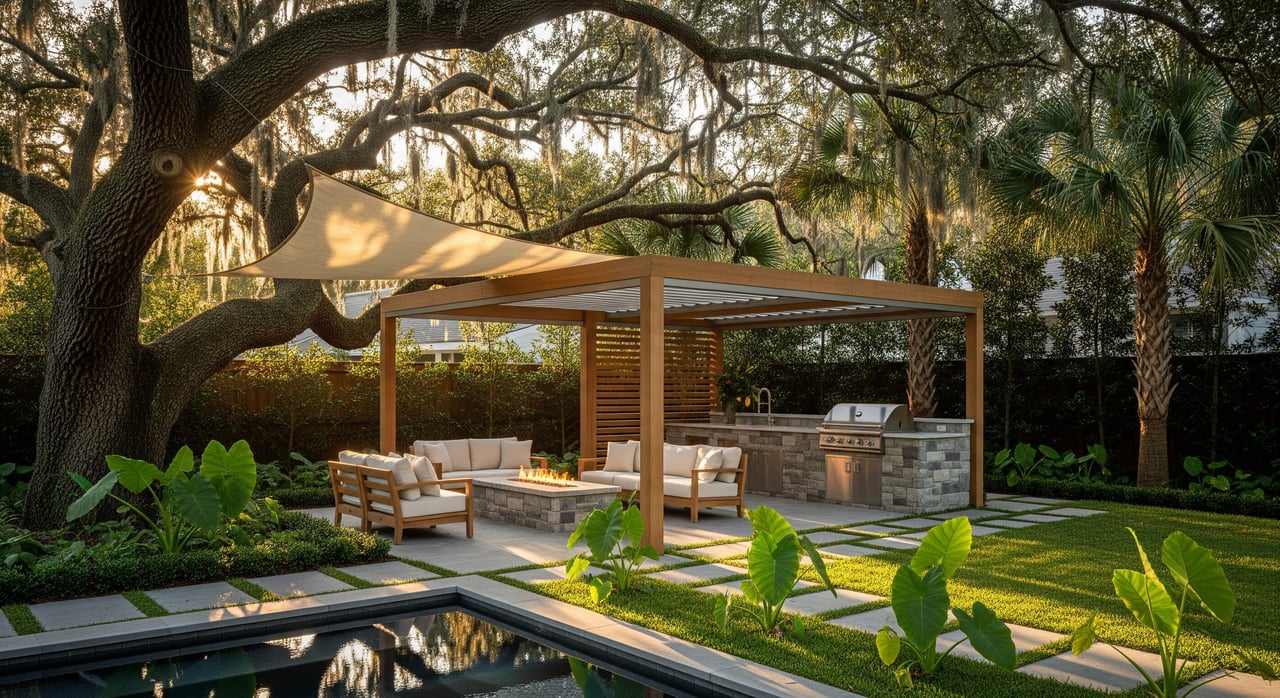
Pergolas create an outdoor “room” with dappled shade. You can add slats, retractable canopies, or vines for more coverage. They are versatile and often more affordable than roofed additions. Larger or attached pergolas may trigger permits, and all installations should consider wind loads and proper footings.
Retractable or fixed awnings
Awnings deliver instant shade at doors, windows, and patios. Retractable fabric lets you allow winter sun and offer convenience with motorized options. Fabric can suffer wind damage, so use wind-rated products and retract before storms. Fixed metal awnings need secure anchoring and may require permits when attached to the structure.
Solid-roof pavilions
Pavilions or pergolas with solid roofs offer maximum shade and rain protection. They are typically treated like structural additions with footings and engineered design. Costs and permitting requirements are higher, but usability is excellent year-round.
Screened porches and lanais
Screened outdoor rooms are a Florida favorite. You gain shade, airflow, and insect control, which adds strong day-to-day value and appeal to future buyers. These projects almost always require permits, wind-load compliance, and floodplain review if applicable. They also tend to offer some of the best perceived value at resale.
Plant your long-term shade
Trees and plantings are the most sustainable shade solution over time. In Duval County’s sandy soils, plan for soil improvement, mulching, and consistent irrigation during establishment.
Best trees for Northeast Florida
- Live oak: Long-lived canopy and excellent wind resistance. Slow to moderate growth, but a legacy tree.
- Southern magnolia: Evergreen shade and screening with strong presence. Allow room for roots.
- Bald cypress: Tolerates wetter spots and provides generous canopy; drops leaves in winter.
- Loblolly or slash pine: Faster growth and wind tolerance when properly spaced.
- Willow oak: Faster canopy with some storm brittleness; use thoughtfully.
- Medium options: Crape myrtle for summer blooms and light shade; red maple where moisture is sufficient.
For privacy and layered shade, consider yaupon holly or wax myrtle as evergreen screens. For pergolas and trellises, Carolina jessamine and confederate jasmine are popular choices. Choose vines that won’t overwhelm structures and avoid aggressive species.
Placement and spacing
- Prioritize south and west sides to reduce afternoon heat.
- Keep large canopy trees about 20 feet or more from the house; medium trees 10 to 20 feet, depending on species.
- Maintain clearance around HVAC units for airflow and service.
- Stay clear of overhead lines and call utilities before digging to locate underground lines.
Planting best practices
- Amend sandy soil with organic matter at planting and water consistently during establishment.
- Mulch 2 to 4 inches deep, keeping mulch away from trunks.
- Stake only if needed, and remove stakes after establishment.
Budget, maintenance, and insurance
Every yard and budget is different. Here are ballpark ranges to help you plan. Get three local written estimates for accuracy.
- Shade sail: Small DIY $200 to $1,500; larger pro install $1,000 to $4,000+.
- Pergola: Basic wood $2,000 to $6,000; larger or aluminum $6,000 to $15,000+.
- Retractable awning: $1,500 to $6,000 depending on size and motorization.
- Screened porch/lanai: $10,000 to $40,000+ based on size and engineering.
- Large trees installed: $300 to $2,000+ per tree by species and size.
Maintenance varies by material. Fabric elements typically last 5 to 15 years before major service or replacement. Wood needs periodic sealing or staining. Aluminum and vinyl are lower maintenance. Trees need regular pruning and inspection for storm readiness. Before hurricane season, remove or secure fabric and lightweight features per manufacturer guidance. If you have large trees near structures, schedule routine pruning with a certified arborist. Some insurers may require mitigation around large trees or offer discounts for wind-resistant upgrades.
A step-by-step plan
1) Map your sun and wind
Note where the sun hits hardest in the afternoon and where wind funnels through your yard. Focus shade on the south and west sides first.
2) Add immediate comfort
Use umbrellas, a pop-up canopy, or a small shade sail so you can enjoy your yard while you plan bigger improvements.
3) Design medium-term structures
Decide between a pergola, awning, pavilion, or screened porch based on budget, maintenance, and how you plan to use the space. Plan anchoring and materials with wind in mind.
4) Plant for long-term payoff
Choose wind-strong native or adapted trees and layer with shrubs and vines for filtered light, privacy, and breeze-friendly cooling.
5) Check permits and utilities
- Will a pergola or attached awning need a permit?
- Does a screened porch trigger structural and floodplain reviews?
- What are HOA setbacks or height limits?
- Do posts need footings under code? Where are underground utilities?
6) Bring in the pros
For structures, use a licensed contractor or reputable awning installer. For trees, consult a certified arborist. For planting plans, a landscape designer or UF/IFAS resources can help tailor species to your microclimate. Confirm requirements with City of Jacksonville Building & Permitting before you start.
Resale advantages in Jacksonville
Outdoor living ranks high with Florida buyers. Usable, shaded spaces such as screened porches and well-designed pergolas extend your living area and help listings stand out. Native and low-maintenance landscaping adds curb appeal, and strategic tree placement can support comfort and potential energy savings. When you sell, highlight year-round usability, durable materials, and any utility-friendly features buyers value.
Ready to make your Garden City backyard cooler, safer, and more valuable? Our team helps you prioritize projects that fit your budget, timeline, and future plans. You deserve an easy button — Get your Free Home Valuation.
FAQs
Do Garden City pergolas need permits?
- It depends on size, permanence, and whether it’s attached to the home. Larger or attached pergolas typically require permits under the Florida Building Code. Always confirm with City of Jacksonville permitting and your HOA.
Are shade sails good for Jacksonville’s winds?
- They work well when properly engineered and anchored with wind-rated hardware, and when removed before storms. Plan for seasonal removal during high-wind threats.
What trees give reliable wind-resistant shade?
- Live oak and southern magnolia are long-lived, wind-strong choices. Bald cypress tolerates wetter spots. Faster growers like loblolly or slash pine can help sooner when spaced correctly.
How far from my house should I plant a tree?
- As a general guide, plant large canopy trees 20 feet or more from the house and medium trees 10 to 20 feet, adjusting for species and mature spread.
Will shade actually lower my cooling costs?
- Yes. Shading south and west walls and windows commonly leads to double-digit reductions in cooling demand. Actual savings vary by home and the amount of shade added.
What’s the best first step for a tight budget?
- Start with umbrellas or a small shade sail for instant comfort, then add a modest pergola or retractable awning. Plant one or two well-chosen trees for long-term payoff.