Love the idea of living steps from the sand but not sure how Jacksonville Beach condos really work? You’re not alone. Between fees, insurance, amenities, and association rules, condo shopping can feel different than single-family homes.
This guide walks you through the basics you need to compare options confidently. You’ll learn the main condo types around Jacksonville Beach, what typical fees cover, key insurance and flood facts, how amenities and rental rules affect value, and the documents to review before you buy.
Let’s dive in.
Condo types in Jacksonville Beach
Oceanfront towers
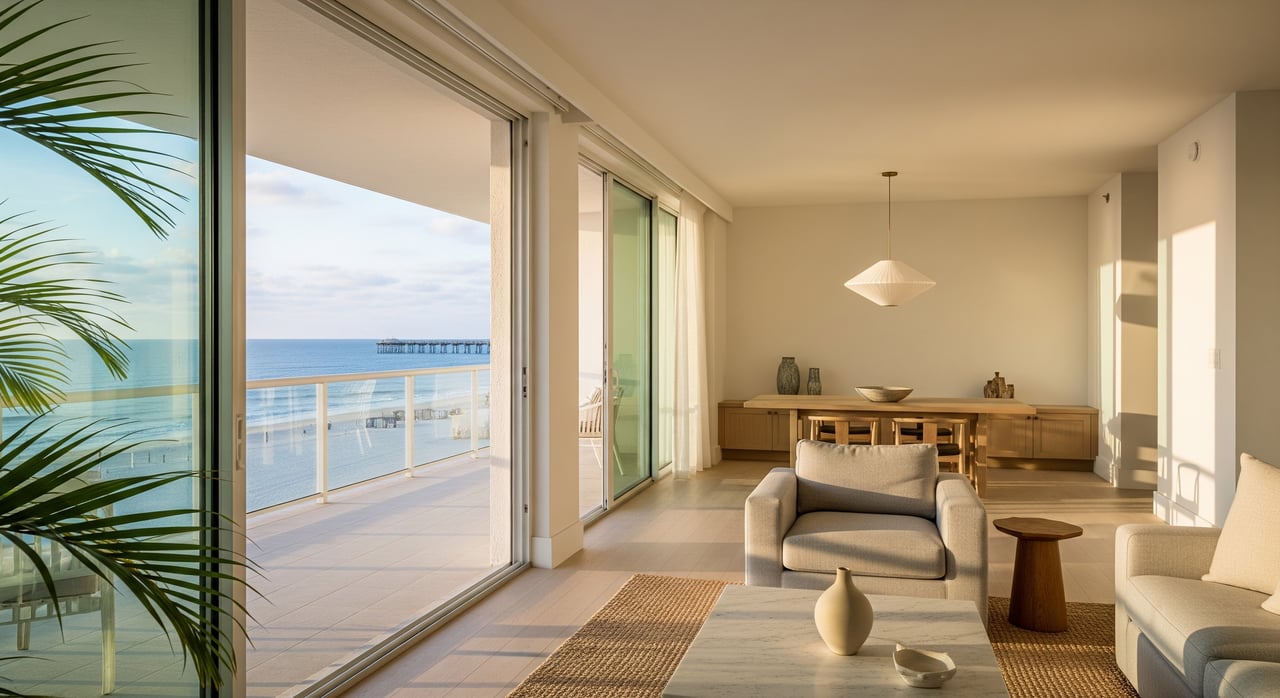
If you want the surf at your doorstep, oceanfront mid and high-rises line the beach and parts of A1A. These buildings often feature concrete or reinforced masonry construction, elevators, and higher service levels like pools, fitness rooms, security, and direct beach access. Units command premium prices per square foot for views and location.
You should expect higher monthly fees here. Structural insurance, elevator service, and robust amenities drive costs. These buildings also face higher wind and flood exposure, which affects insurance planning.
Across A1A and near-beach mid-rises
West of A1A, you’ll find mid-rise buildings within a short walk or bike ride to the sand. Many offer partial views or quick access to public beach walkovers. Fees are often moderate compared with direct oceanfront because insurance and amenity loads tend to be lower.
These properties can offer a good balance: beach convenience without the oceanfront price and exposure. You’ll see a mix of owner-occupants and investors.
Boutique, low-rise, and garden-style
Interior blocks and adjacent neighborhoods feature smaller associations with fewer units and limited amenities. Fees are often lower and the vibe more intimate. Construction can be wood-frame or small masonry buildings.
Smaller associations can mean more volatility if a roof or major component needs replacement. With fewer owners to share costs, special assessments are a bigger consideration. Review reserves closely before you commit.
Townhouse-style and fee-simple setups
Some attached communities are structured as condominiums, while others are fee-simple with a homeowners association. The ownership structure affects insurance, maintenance, and governance. Florida’s Condominium Act under Chapter 718 of the Florida Statutes governs condos, while many townhouse HOAs fall under different rules. Confirm how a community is set up so you understand your responsibilities.
What condo fees cover
Typical inclusions
Condo fees usually cover exterior building maintenance, roof and structural repairs through the association’s master policy, landscaping, pool and amenity upkeep, elevator service, common-area utilities, management, legal and accounting, and reserves for capital projects. Many associations also include water and sewer. Some have bulk cable or Internet. Always verify what’s included for a specific building.
Fee ranges and what drives them
In coastal Florida, monthly fees can range from a few hundred dollars to over a thousand depending on building age, size, condition, and amenity level. Oceanfront towers sit toward the high end because of insurance and amenities. Smaller buildings with fewer services trend lower. Fees change over time, so ask for the current budget, reserve study, and a fee history before you buy.
Reserves and special assessments
Healthy reserves reduce the risk of large one-time assessments for roofs, elevators, or building systems. Ask for the most recent reserve study, the association’s financial statements, and 12 to 24 months of meeting minutes. Red flags include no reserves, frequent assessments, large fee jumps, or big projects without a clear funding plan.
Insurance and flood facts to know
Master policy vs. your HO-6
The association’s master policy typically covers the building structure and common areas. The exact coverage depends on the condo documents and Florida law. Review the master policy’s scope and deductibles, and compare it to your unit policy, often called an HO-6. Your HO-6 generally covers interior improvements, personal property, liability, and loss assessment coverage to help with gaps not covered by the association. For legal context on condo insurance responsibilities, see Florida’s Condominium Act, Chapter 718.
Wind and hurricane deductibles
Many coastal master policies carry separate hurricane or windstorm deductibles, often stated as a percentage of the policy limit. If a major storm hits and the association has not reserved for the deductible, a special assessment can be passed to owners. Confirm the deductible amount and how the board plans to fund it before you close.
Flood zones and required coverage
Standard property policies do not cover flood. If the building is in a FEMA Special Flood Hazard Area, a lender will require flood insurance. Premiums vary by elevation, flood zone, and mitigation features. To verify a property’s flood zone and Base Flood Elevation, use the FEMA Flood Map Service Center. For broader consumer guidance on insurance in Florida’s evolving market, see the Florida Office of Insurance Regulation’s consumer resources.
Amenities, rules, and lifestyle fit
Common amenities and their impact
Jacksonville Beach condos commonly offer pools, fitness centers, elevators, covered or secured parking, storage, gated entries, and on-site management. Amenities enhance the day-to-day experience and often help resale if they match buyer demand. They also add to monthly fees, so focus on what you will actually use and value.
Rental rules and local compliance
Every association sets its own rental rules. Some allow short-term stays, while others require a minimum lease term. If rental income matters, review the bylaws and declarations closely. Also check local requirements. The City of Jacksonville Beach enforces its municipal code and may require registrations or permits related to transient rentals. Start at the City of Jacksonville Beach Code of Ordinances and confirm current rules with the city. If you plan to rent, be aware of county and state tax registration and collection requirements as well.
Pets, parking, and noise
Most associations set pet rules by number, size, and sometimes breed. Parking can be assigned, deeded, or first-come. Guest parking and storage availability vary. Ask for parking maps and policies in writing. Review noise and nuisance policies, plus enforcement history in the meeting minutes, so you know what to expect.
Resale and financing in Jacksonville Beach
What drives resale value
Resale in Jacksonville Beach is influenced by proximity to the beach, walkability, unobstructed views, parking and storage, building condition, recent capital improvements, association financial health, and rental or pet policies. Flood exposure and storm hardening also matter to buyers and lenders. Buildings with stronger elevation, mitigation, and clear maintenance plans often show better marketability.
Financing and project approval
Condo financing depends on both you and the building. Lenders review a project’s concentration of investors, commercial space, reserves, litigation, and more. FHA, VA, Fannie Mae, and Freddie Mac each have their own standards. Some lenders allow project-by-project or spot approvals, but options may be more limited. Explore program rules from HUD’s condo resources and Fannie Mae’s project eligibility. Coordinate early with a lender who regularly finances Florida coastal condos.
Due diligence checklist for buyers
- Ask for key association documents: declaration, bylaws, articles, and rules.
- Review the current budget, most recent financials, and the latest reserve study.
- Confirm master insurance coverage and deductibles, plus certificates.
- Read board meeting minutes from the last 12 to 24 months for planned projects.
- Request the unit’s assessment and payment ledger and any pending litigation disclosures.
- Verify rental policies, occupancy limits, and any short-term rental procedures.
- Order a home inspection. Add specialized inspections if indicated, such as mold, wind mitigation, or a structural engineer review.
- Check flood zone and elevation at the FEMA Flood Map Service Center, then price flood insurance accordingly.
- Confirm parking and storage rights in writing.
- For public record details and taxes, verify the parcel with the Duval County Property Appraiser.
Condo vs. single-family near the beach
- Maintenance scope: Condo fees cover exterior and shared elements. With a house, you handle those costs directly. Compare total monthly costs rather than fees alone.
- Insurance approach: Condos rely on a master policy plus your HO-6. Houses use a standard homeowners policy. Flood insurance rules depend on the property’s zone either way.
- Lifestyle and amenities: Condos can bundle parking, pool, fitness, and beach access. Houses focus on private space and flexibility without association rules.
- Predictability: A well-funded condo can smooth out big-ticket building work. A house gives you full control, but you shoulder larger repairs on your own schedule.
Your next steps
- Clarify your must-haves: ocean views, quick beach access, secure parking, storage, pet needs, and rental goals.
- Talk with a lender who knows Florida coastal condos about project eligibility and loan options.
- Review association financials, reserves, and insurance before you write an offer.
- Plan inspections with coastal conditions in mind and confirm flood details early.
Ready to tour Jacksonville Beach condos and compare them to near-beach homes with a clear plan? Connect with the Sarah Schwartz Group for responsive guidance and a smooth, well-organized search.
FAQs
What do Jacksonville Beach condo fees usually include?
- Fees often cover exterior maintenance, master insurance, amenities, common utilities, management, and reserves. Some include water, sewer, and bulk cable or Internet.
How does flood insurance work for Jacksonville Beach condos?
- Standard policies exclude flood. If a building is in a FEMA Special Flood Hazard Area, lenders require flood coverage. Check your address at FEMA’s Flood Map Service Center.
Are short-term rentals allowed in Jacksonville Beach condos?
- It depends on the association’s minimum lease rules and city requirements. Review the condo documents and confirm local rules with the City of Jacksonville Beach.
What is a condo reserve study and why does it matter?
- A reserve study estimates timing and costs for major repairs like roofs or elevators. Strong reserves reduce the chance of large special assessments.
Can I use FHA or VA financing to buy a Jacksonville Beach condo?
- Possibly. Eligibility depends on the project’s compliance with program standards. Check HUD and your lender for the latest rules and building approvals.
How do oceanfront and across-A1A condos differ in costs?
- Oceanfront towers usually have higher fees and insurance costs due to exposure and amenities. Across-A1A buildings often balance beach access with lower carrying costs.